
Why Pretty Boot Rooms Fail the Working Farm Test
A boot room can look wonderfully inviting in a magazine photograph, with painted cabinetry, pale stone, woven baskets and a carefully placed pair of wellingtons. Yet real UK farm life is rarely so tidy. Thick clay sticks to boots, gravel works into every tread, waterproofs arrive dripping, and a wet dog can turn a clean entrance into a trail of mud within minutes. A room designed mainly for appearance will soon show every mark and become frustrating to maintain.
A working boot room needs to behave more like an airlock than a delicate entrance hall. The best boot room ideas begin with the same question: how can outdoor dirt be stopped before it reaches the kitchen? That means creating a clear place to drop muddy gear, a comfortable area for removing boots, and a clean passage into the house. The priorities are straightforward: contain mud, dry clothing and footwear overnight, and keep people, dogs and equipment moving without a bottleneck.
The Three-Zone Layout That Traps Grime at the Threshold
The most useful layout divides the room into three working zones. These do not need to be separated by walls. A change in flooring, a bench, a drainage channel or a simple line of hooks can make the boundary obvious. The important point is that wet and dirty items should not be carried further into the room than necessary.
Zone 1 is the drop zone. Place it directly beside the outside door. This is where boots are left, wet coats are removed and muddy paws can be rinsed. A tough mat should sit outside as well as inside, but no mat can cope with every farm condition on its own. Give boots a tray with a raised lip, provide hooks at a practical height, and keep a bucket, stiff brush and old towels close by. If the room connects to a yard, the outside approach is worth improving too. A short section of firm paving or a walk-off grate can remove a surprising amount of soil before anyone crosses the threshold.
Zone 2 is the transition zone. This is where a person sits down, removes dirty footwear and changes into clean indoor shoes. A bench should be deep enough to sit on securely and strong enough to tolerate heavy use. Underneath, install removable drainage trays or open shelving rather than a sealed cupboard that traps wet grit. Boot jacks are a small but worthwhile addition, particularly when frozen mud or tight rubber boots make removal awkward. A well-planned boot room treats seating, storage and movement as one job rather than separate decorating decisions.
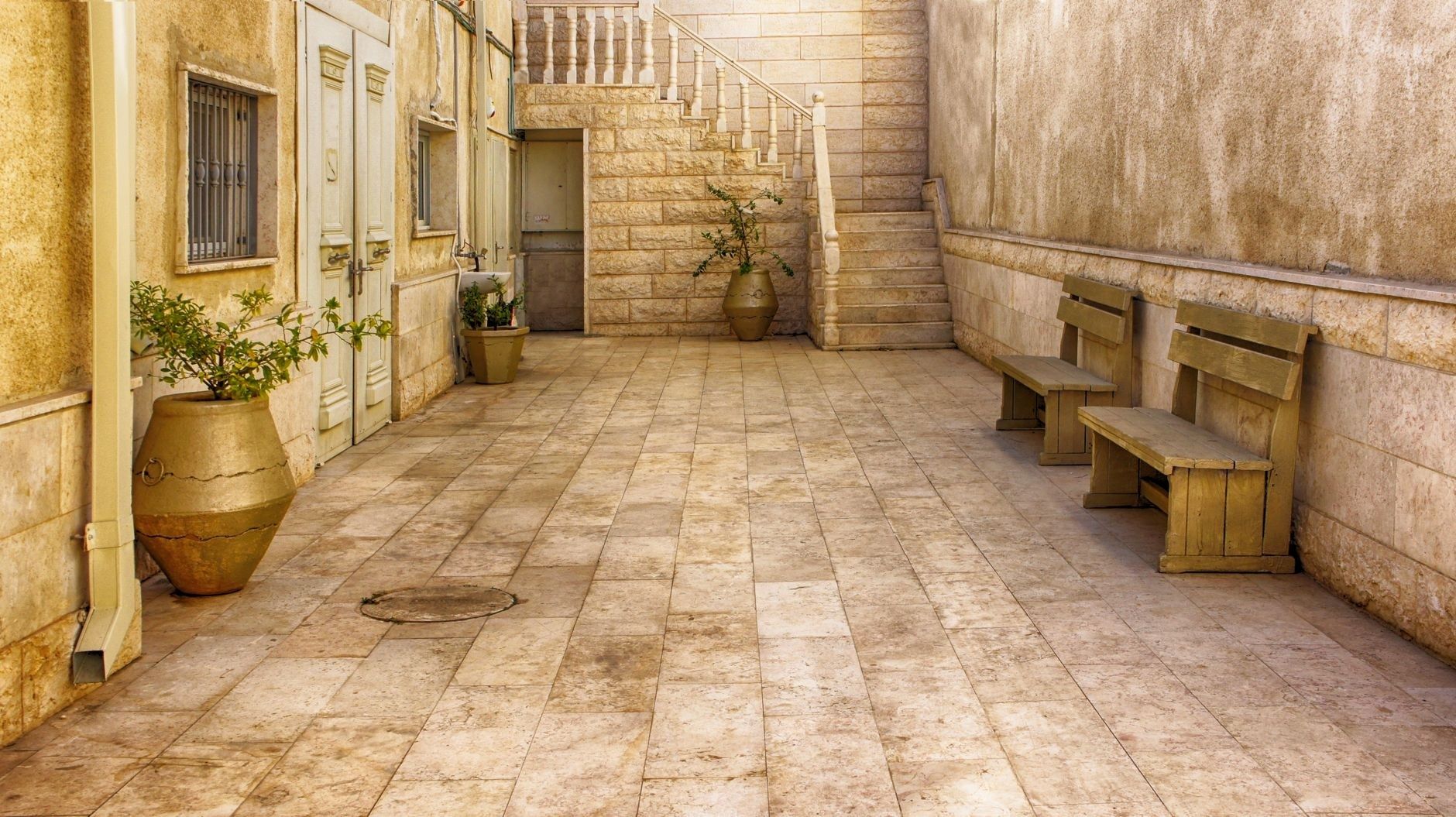
Zone 3 is the clean passage. Keep dry coats, clean domestic footwear, school bags and household items on this side of the room. It should lead naturally towards the kitchen or hallway without requiring anyone to step over muddy boots. Clear demarcation prevents farm residue from spreading through the house.
- Put the dirtiest work immediately beside the external door.
- Provide a seated stripping point with trays beneath it.
- Keep clean clothing and the route into the house beyond the wet gear.
- Store brushes, towels and cleaning products at the point where they are used.
Indestructible Floors and Drains Built for Real Mud
Flooring is where many attractive boot rooms reveal their weakness. Standard ceramic tiles can chip under dropped tools, porous stone can absorb slurry and oil, and delicate grout quickly darkens when grit is scrubbed across it every day. Even a floor that looks hard-wearing in a normal hallway may struggle when it is exposed to wet dogs, manure, salt, sharp gravel and repeated washing.
Dense concrete is a dependable option when properly finished and sealed. An existing slab can sometimes be treated with a lithium-silicate densifier such as LIQUI-HARD ULTRA, which penetrates the surface, reacts within the concrete and helps reduce dust and abrasion. Application must follow the manufacturer”s instructions, including cleaning and drying the slab, keeping the product wet for the specified period and removing excess material. This is a treatment for suitable concrete, not a substitute for correcting cracks, poor falls or drainage problems. Professional advice is sensible, particularly where the room will be washed frequently.
Quarry tiles remain a strong traditional choice, provided the tiles and grout are selected for heavy-duty use and sealed appropriately. Heavy-duty porcelain offers a wider range of colours and patterns, with very low water absorption, but the installation still matters. Large-format tiles may reduce grout lines, although they need a sound, level base. Darker, subtly patterned surfaces are generally more forgiving than bright, polished finishes, which show every paw print and splash.
| Flooring option | Main advantage | Important consideration |
|---|---|---|
| Treated dense concrete | Excellent strength and easy washdown | Needs correct falls, joints and suitable surface preparation |
| Quarry tiles | Traditional, tough and visually forgiving | Grout and sealing must withstand grit and moisture |
| Heavy-duty porcelain | Low water absorption and many design choices | Use a robust installation and avoid slippery polished finishes |
Drainage makes the difference between a floor that can be cleaned and one that becomes a permanent mud trap. A slight fall towards a floor gully or linear drain allows wash water to leave instead of pooling beneath benches. A removable grate catches stones, hair and straw before they enter the pipework. Where a full drain is not practical, use deep, washable boot trays and plan a convenient route for carrying dirty water outside. Sealed skirtings, coved flooring or waterproof baseboards are also valuable because they remove the vulnerable joint where plaster, timber and wet dirt usually meet.
Ventilation and Heat That Actually Dry Wet Waterproofs
Wet clothing does not become harmless simply because it has been hung on a hook. In a closed room, saturated coats, wool jumpers and rubber boots release moisture into the air. The result can be a sour smell, condensation and mould around cold corners. Drying is especially difficult when several people return from the fields at once and every item is hung tightly together.
Underfloor heating works particularly well in a boot room because it warms the floor, trays and lower parts of boots without taking up wall space. Pairing it with continuous mechanical extract ventilation is more effective than relying on a radiator and an open window. Extract should remove humid air steadily, while replacement air is allowed to enter through a suitable vent or controlled gap. Any electrical or heating equipment must be appropriate for a damp environment and installed by a qualified professional.
Drying capacity needs to match the household. A ceiling pulley airer, often called a Sheila Maid, uses the warmest part of the room and can carry several coats, towels and woollen layers without occupying the floor. Tubular boot heaters are useful for rubber footwear, but boots should not be exposed to excessive heat, which may damage adhesives, leather or waterproof membranes. Slatted benches allow warm air to circulate beneath clothing and footwear. A radiator positioned below a metal or timber slatted bench can provide useful background warmth, provided it is not blocked by storage boxes.
- Use continuous extract ventilation to control humidity rather than depending only on occasional window opening.
- Install underfloor heating where the floor construction and budget allow.
- Use ceiling airers for coats, towels and woollen garments.
- Dry boots with gentle, even heat and follow the care instructions for specialist footwear.
- Leave space between hanging items so air can move around them.
Do not overlook drying after cleaning. A rinsed dog, washed boot or wet floor can add more moisture than a rainy coat. A timed extract fan, wipe-clean splashback and a place for towels to hang fully open will shorten drying times and help keep smells under control.
Storage Built for Heavy Tools, Clouts, and Working Dogs
Storage must be strong, visible and easy to clean. Closed cabinetry has its place for medicines, chemicals and items that need protection, but damp coats and muddy boots usually fare better on open, slatted shelving. Air can circulate around them, wet items are less likely to be forgotten, and the floor is easier to sweep. Shelves should be deep enough for boots and waterproof trousers, with a raised front edge to stop items sliding off.
A deep Belfast or utility sink is one of the most useful investments in a rural entrance. With a high-neck mixer tap, it can accommodate muddy boots, buckets, tools and gardening equipment. A flexible hose attachment makes rinsing faster and reduces the temptation to use the kitchen sink. If space permits, a dedicated dog-washing station should include a handheld shower, a nonslip floor, a restrained splashback and a nearby towel rail. The splashback needs to continue high enough to catch enthusiastic shaking, and the surrounding floor should drain or be easy to mop.
Hooks should be fixed securely into substantial backing, not merely screwed into plasterboard. Forged or commercial-grade hooks spaced widely apart will carry sodden wax jackets, boiler suits and riding gear without crowding. Give each regular user a defined hanging point, and keep dog leads, reflective clothing and towels together rather than scattered across the room. Drawers are often more useful than cupboards for gloves, hats, head torches, boot-care products and small tools because contents can be reached without kneeling on a muddy floor.
- Use open slatted shelves for damp boots and clothing that need airflow.
- Reserve closed cupboards for chemicals, medicines and clean seasonal items.
- Fit a deep sink with a high-neck tap and, ideally, a hose attachment.
- Create a dog-washing point with a handheld shower and quick-dry splashback.
- Install heavy-duty hooks on reinforced walls, with generous spacing.
- Keep a lidded, washable bin nearby for used towels, gloves and disposable waste.
Storage should also reflect the working rhythm of the property. A smallholding may need room for fencing gloves, secateurs and feed sacks, while a family farm may need school coats, riding hats and several pairs of wellingtons. Measure the largest items before ordering cabinets. A boot room that has no spare capacity will become untidy even when every storage unit is technically in use.
Reclaim a Clean Farmhouse by Building for Everyday Reality
A successful rural boot room is judged by how little thought it requires on a wet Tuesday morning. If boots have an obvious home, wet coats can dry without touching clean clothing, and dirty water has somewhere to go, the room quietly prevents work from spreading through the house. That is more valuable than a fashionable colour scheme or a perfectly styled shelf.
Indestructible surfaces, functional warmth and defined zoning are worthwhile investments because they reduce repeated cleaning throughout every rainy season. Begin with the weak point rather than attempting a complete renovation all at once.
- Place a deep, washable boot tray immediately inside the most-used external door.
- Secure a strong bench and add a boot jack for easier changing.
- Replace flimsy hooks with wide-spaced, heavy-duty versions fixed into solid backing.
- Install open shelving or slatted racks so damp footwear can breathe.
- Add a large sink, outdoor boot washer or hose point to move the dirtiest work outside the house.
- Check whether the room has enough ventilation, and fit a suitable extract fan if humidity lingers.
- Use removable mats and drainage trays that can be emptied and washed without dismantling furniture.
- Mark the clean passage clearly, keeping indoor shoes and dry household items beyond the wet zone.
These changes may not produce the prettiest room in the county, but they create one that works. Once the threshold is designed around real mud, soaked waterproofs and wet dogs, the farmhouse becomes easier to live in, cleaner to maintain and far less vulnerable to the daily mess of country life.

