
Why Moving Away from Set Stocking Protects Your Land and Your Wallet
For many UK smallholders, winter arrives with the same quiet worry: how many bales will be needed, where will they be stored, and what will they cost if prices rise again? Hay and haylage are valuable safety nets, but relying on bought-in forage for too many months can quickly absorb the margin from a small cattle or sheep enterprise. The pressure is especially noticeable after a wet autumn, when poached gateways and tired fields provide little useful grazing.
Set stocking, where animals remain on the same area for long periods, often appears simple but can leave pasture working harder than it can recover. Livestock repeatedly graze the most palatable regrowth, while less desirable plants mature around it. Bare patches develop, roots weaken, soil becomes compacted and rainfall turns gateways into mud. Rotational grazing offers a more manageable alternative. It does not require an expensive infrastructure project or perfect grassland records. A few temporary divisions, a reliable water arrangement and regular observation can give grass genuine recovery time, improve utilisation and leave more forage standing for winter.
The Anatomy of Rest and Recovery in British Pastures
Grass does not grow at a constant rate, and it does not recover simply because animals have moved a few metres away. After grazing, a plant initially draws on stored energy in its roots and crown to produce fresh leaves. Once enough leaf area has returned, photosynthesis begins replenishing those reserves. For many perennial ryegrass swards, the most useful grazing point is around the two-and-a-half to three-leaf stage. Grazing too early forces the plant to rely repeatedly on reserves, while allowing a sward to become excessively mature increases leaf death and reduces quality.
The practical lesson is that a paddock needs both an appropriate entry point and an appropriate residual. Leaving a reasonable amount of green leaf after grazing allows quicker recovery than scalping plants close to the soil. Overgrazing can reduce root growth, expose soil and make the field less able to withstand dry weather or heavy rain. It also limits the living root activity that supports soil structure and biological activity. A thick, well-rooted turf is not merely attractive. It is a working asset that captures rainfall, carries stock and produces more usable forage.
Diverse swards can strengthen that asset. A mixture of grasses, legumes and deeper-rooting herbs may offer a broader spread of rooting depths, nutrient capture and seasonal growth. Chicory, plantain, clovers and other suitable species can contribute to drought resilience and improve the physical condition of soil, although establishment and grazing management need care. A useful example is provided by the Department for Environment, Food and Rural Affairs in its White Peak herbal leys case study, which follows a Derbyshire beef farmer using diverse leys within a low-input commercial system.
- Use several grazing areas so stock do not repeatedly target the same regrowth.
- Keep an eye on residual height rather than judging pasture only by its colour.
- Adjust stock numbers or grazing area when growth slows in cold, dry or waterlogged weather.
- Test soil and correct pH and nutrient shortages before expecting grass to perform better.
- Consider diverse swards where they suit the soil, livestock and intended use of the field.
Stocking density also needs a sensible balance. More animals in a smaller area for a short period can improve control, provided the move is made before excessive grazing or poaching occurs. The aim is not simply to put as many animals as possible into one paddock. It is to achieve a predictable amount of grazing, leave an adequate residual and then provide enough rest. Even a smallholder with two or three fields can begin by creating a clear grazing and recovery pattern.
Setting Up Budget-Friendly Temporary Electric Fencing
Temporary electric fencing is often the quickest way to test rotational grazing without committing to permanent subdivisions. A basic system normally includes an energiser, suitable earthing rods, polywire or electric tape, reels, tread-in posts and connectors. Battery, solar, mains and multi-powered energisers are all available, and the right choice depends on fence length, vegetation, soil conditions and whether the system must move regularly. Stored joules are a useful comparison when selecting an energiser because they indicate the unit’s capacity to maintain a pulse when grass touches the line or the system is expanded.
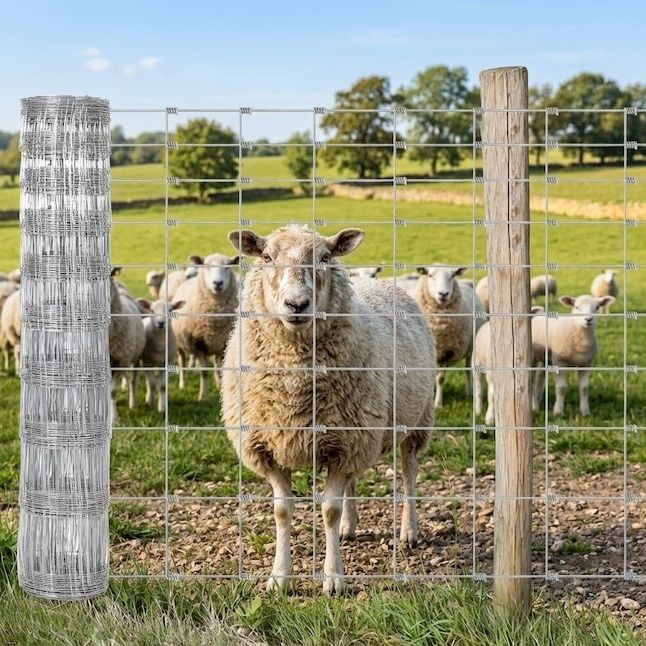
Electric fencing is a psychological barrier rather than a heavy physical wall, so livestock must learn to respect it. Train cattle or sheep in a secure area where the fence is visible and the animals can move away after receiving a brief shock. Grounding is just as important as the energiser itself. Poor earth connections, broken joins, vegetation contact and damaged wire can reduce voltage and create unreliable containment. Existing hedges and boundaries should do as much of the work as possible. Map water points, gateways, shade, footpaths and awkward corners before deciding where temporary lines will run.
- Sketch the field and mark existing fences, water access, gateways and any areas prone to poaching.
- Choose a simple division that gives stock a manageable grazing area and keeps the water arrangement practical.
- Install the earth rods and energiser, then run polywire between tread-in posts with enough visibility for the livestock.
- Test voltage at the far end and inspect for contact with grass, metal or damaged connections.
- Move the line using a reel and posts, keeping the next allocation ready before stock finish the current one.
With a straightforward layout, a paddock move can take less than twenty minutes. Plastic troughs, portable tanks or a central drinking point can reduce the need for permanent pipework during the trial stage. Small ruminants may need more visible tape, additional strands or electric netting, while mature cattle often learn to respect a well-maintained single strand. The best system is the one that is reliable enough to prevent escapes and simple enough to be used consistently.
Seasonal UK Rotation Timelines and Recovery Cycles
Rotation length should follow growth, not a fixed calendar rule. In the spring flush, grass can move from entry height to over-mature material quickly, so paddocks may need to be visited again after a relatively short recovery period. In late summer and autumn, cooler temperatures, shorter days and variable rainfall slow regrowth. Recovery periods then become longer, and the grazing area may need to increase or the stock group may need supplementary feed.
Visual assessment is useful, but regular measurements make decisions more reliable. A sward stick, ruler or plate meter can help record average height, while a consistent walk through each paddock reveals bare areas, dung distribution and signs of grazing regrowth. For perennial ryegrass, a sward around 8 to 12 centimetres is broadly associated with strong production in the referenced grazing guidance, but local species, soil and livestock type matter. The figures below are starting points rather than promises. Weather and field condition should always take priority.
| Season | Typical approach | Useful field indicators |
|---|---|---|
| Early spring | Short grazing periods and frequent checks as growth accelerates | Fresh leafy growth, firm ground and little bare soil |
| Late spring and early summer | Maintain a planned rotation and remove surplus growth for conservation if required | Leafy sward at entry, adequate residual after grazing |
| Late summer | Lengthen recovery and begin selecting areas for autumn stockpiling | Slower regrowth, seed heads controlled and reasonable ground cover |
| Autumn | Protect wet fields, reduce traffic and use standing forage strategically | Good cover, firm gateways and no widespread poaching |
| Winter | Graze sacrifice areas or stockpiled paddocks carefully, with hay available when needed | Stock condition maintained and soil damage kept within acceptable limits |
The key visual signals are straightforward. Enter when there is enough leafy material to provide a worthwhile bite without forcing animals to graze the base. Leave before the remaining plants are repeatedly nibbled or the soil becomes visible. If stock are searching, walking constantly or returning to previously grazed patches, the allocation may be too small or the move too late. If large areas remain untouched, the paddock may be too big or the sward too mature.
Stockpiling Autumn Grass to Drastically Cut Winter Hay Bills
Stockpiling, sometimes called standing forage or foggage, means closing selected pasture at the end of summer so it can be grazed later. In a UK system, August is often a useful planning point, although the correct date depends on rainfall, soil type, grass species and the likely start of winter feeding. The selected paddocks should be grazed or topped appropriately before closing, then left undisturbed while autumn growth accumulates. This is not abandoned grass. It is stored feed in the field, ready to be rationed when fresh growth becomes scarce.
The financial logic is simple. Every day that sheep or cattle harvest stockpiled forage themselves is a day when a bale does not need to be bought, transported, stacked, handled and placed in a feeder. The exact saving depends on bale prices, animal numbers, forage quality and winter weather. Evidence from extension work in other climates should not be transferred directly to British farms, but it demonstrates the principle clearly: well-managed standing forage can add many grazing days and materially reduce winter feed costs. A UK smallholder should calculate the local value by comparing the cost of a bale with the expected dry matter available in the closed paddock.
Quality will decline as grass matures, so stockpiled forage is usually most suitable for animals whose requirements are moderate, such as dry cows or maintenance sheep. Pregnant, lactating or growing stock may need better forage, minerals or supplementary feed. Conditions can also make field grazing unsuitable. Frozen ground, persistent rain, deep snow and severe poaching may cause more damage than the saved hay is worth. A sensible plan therefore combines standing forage with a dry lie, a sacrifice area and stored forage for periods when welfare or soil protection demands it.
- Choose fields with good drainage, strong turf and convenient access before closing them.
- Remove stock early enough for useful autumn growth to accumulate.
- Use temporary fencing to strip-graze the bank rather than opening the entire area at once.
- Offer a fresh strip frequently so animals harvest more and trample less.
- Watch gateways, water points and wet corners closely, moving access where necessary.
- Keep hay available when weather, animal condition or ground conditions make outdoor grazing unsuitable.
Strip grazing is particularly valuable during wet spells because it limits the area exposed to hooves. A narrow allocation can reduce waste and protect the next section from trampling. Research and practical guidance on forage stockpiling and reduced winter feed costs emphasise the same central point: standing forage is most useful when it is planned, measured and controlled, not simply left for animals to choose from across a whole field.
Before closing a paddock, estimate how much forage is present and how many animals it might support. Even a rough comparison is better than guessing. Record the date the field was closed, the weather, the number of animals and the point at which hay was introduced. Those notes will show whether the forage bank paid its way and whether the area should be closed earlier, later or for a shorter period next year.
Step Out onto Your Land with a Fresh Perspective
Rotational grazing does not need to begin with a complete farm redesign. Perfection is unnecessary, especially on a smallholding where gates, water and labour impose practical limits. Start with two paddocks, or divide one field into two manageable sections using temporary electric fencing. Graze one side while the other rests, then compare sward height, regrowth, ground condition and animal behaviour. This simple trial will reveal more about the farm’s carrying capacity than a complicated plan built on assumptions.
Daily observation is where the benefits compound. A few minutes spent checking residuals, repairing a fence, moving a trough or noticing a wet patch can protect grass today and improve resilience next season. Over time, thicker turf means better utilisation, longer grazing and less bare soil. Closing one paddock in late summer can create a useful winter forage bank, while measured moves can reduce the number of bought-in bales. This coming weekend, mark a two-paddock trial, test the energiser, confirm water access and decide what entry and exit signs will guide the first move. Small, repeatable improvements are often what turn pasture from a fixed cost into one of the farm’s most dependable assets.

